Elevating Student Voice in MTSS: What North High School Learned From Listening
Updated: Aug 18

Most MTSS systems are built to catch what has already happened: a failing grade, a missed attendance threshold, a discipline referral. Those signals matter, but they only describe a student after the fact, and they never explain why.
Two weeks ago, we brought a different idea to the Washington MTSS Integrated Conference in a session called “Elevating Student Voice to Transform MTSS Systems.” Instead of a theory, we used a real example: North High School’s three-year effort to build a system that actually listens, and what it took to get there. Here’s what you’ll take away from North High’s story:
Screening data tells your team what happened. Student voice tells you why, and what to do next.
North High built trust in a specific order: leadership team, department chairs, staff, then students, not the other way around.
A 152-student survey surfaced real progress and one honest gap: one in three students still said they didn’t feel heard.
Collecting feedback and closing the loop are two different efforts. Only one of them changes a school’s culture.
Where North High started
She started with a plain diagnosis of her own building: communication moved one direction, from administration down to staff, with no reliable way for anything to travel back. That’s a familiar starting point for many schools. When staff and students have no structured way to be heard, a school loses its most direct source of information about why a strategy is working, or why it isn’t, and everyone in the building learns that speaking up doesn’t change anything.
A sequence, not a survey
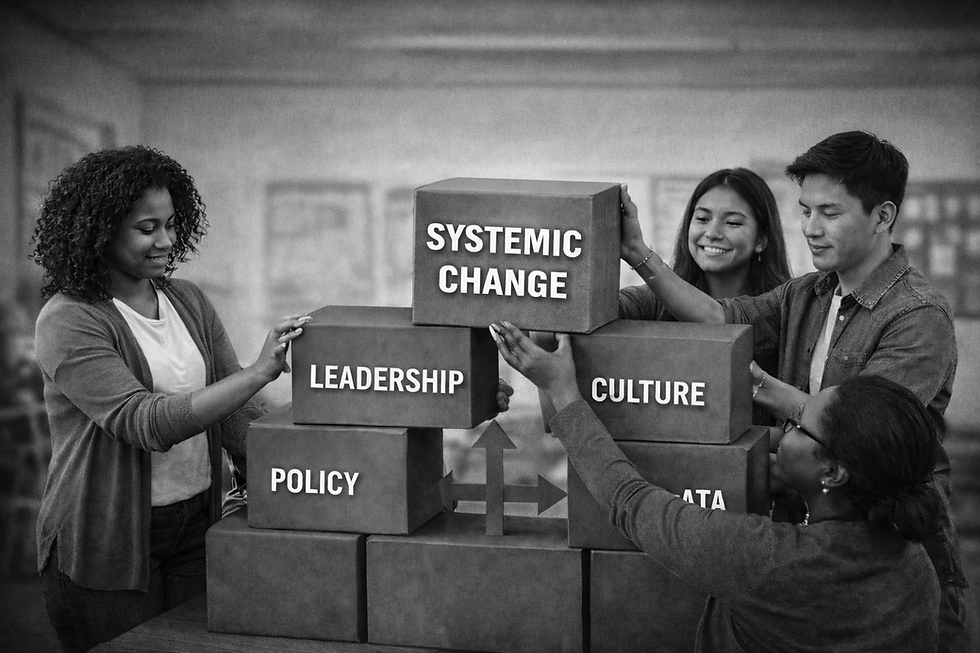
Jodi’s approach was a sequence built one layer at a time. In year one, she met one-on-one with all 11 members of her leadership team, sending each person five questions ahead of time so they could come prepared. She and her assistant principal then did the same with department chairs, and launched a staff survey every fall and spring, with results reviewed openly with staff. Only after that foundation was in place did student voice enter the system: a Star Student Athletic Leadership Forum, a quarterly Principal’s Student Forum built to reflect the actual diversity of the student population, and a Peer Advocacy Center connecting struggling students with peer advocates before problems reached the dean’s office.
By year three, the team surveyed 152 students, deliberately including groups a standard survey tends to miss: English learners, foster and homeless youth, and students in ELD and counseling groups. The results shaped a strategic plan written directly off what those students said. Of those surveyed, 87% knew where to get help, 76% felt they belonged at North, and 68% felt their voice mattered. Yet one in three still said they did not feel heard, a reminder that even a strong system has more listening to do.
Why the order mattered
North High didn’t do this alone, and it didn’t do it in a single semester. The team’s Fidelity Integrity Assessment self-study in October 2025 named subgroup representation and student voice as its top growth priority, and CLS coached North High through the year that followed. The order mattered as much as the content: leadership team, then department chairs, then all staff, then students, with each layer front-loading questions before the conversation and closing the loop afterward by telling people what changed because of what they said. Through subgroup forums, survey design, and a full Plan Do Study Act cycle finalized this spring, North High moved from Initial to Full Implementation on Data-Based Decision Making, the team’s strongest growth area of the year. The next round of student interviews launches at back-to-school in late August.
How CLS can help your team
If your school’s MTSS system is strong on screening data and thin on hearing from the people that data describes, that’s not a failure. It’s the same starting point Jodi described three years ago. CLS’s Fidelity Integrity Assessment can help your team name exactly where student and staff voice currently fit in your Data-Based Decision Making practices, and our coaches can partner with your team to build the same kind of sequence North High did: one honest conversation, then another, until the loop closes. We’d welcome the chance to talk through what that could look like in your district. Reach out to CLS to start the conversation.