Teacher Retention and the Discipline Conversation Schools Can’t Ignore
Updated: Mar 20
A recent survey reported by EdSource found that nearly half of California teachers say they may leave the profession within the next ten years. That number should stop all of us in education for a moment.
Teacher burnout has been building for years, but increasingly, one issue keeps surfacing in conversations with educators: student behavior and school discipline.
In many schools, teachers feel they are being asked to manage progressively complex behavioral challenges without the systems or support needed to do it well. When disruptions repeat without meaningful intervention, instructional time disappears, teachers get exhausted, and over time, many begin asking a difficult question: Is this sustainable?

Discipline Is a Systems Issue
When people talk about discipline, the conversation often becomes polarized. Some argue schools have become too lenient. Others worry about returning to punitive practices that disproportionately harm certain groups of students.
In reality, most educators know the problem is deeper than that.
The issue is rarely about a single student or incident. It’s about whether a school has a coherent and effective system for responding to behavior.
When discipline systems are unclear or inconsistent, several predictable things happen:
Teachers lose instructional time managing repeated disruptions
Students who need support don’t receive it early enough
School culture becomes unpredictable and begins to feel unsafe
Teacher frustration and exhaustion grow
Over time, this environment contributes directly to teacher attrition, something research has consistently linked to school climate and working conditions.
The Discipline Conversation Schools Actually Need
At Collaborative Learning Solutions, we work with schools across the country that are trying to navigate exactly this challenge.
What we’ve learned is simple: discipline works best when it is proactive, equitable, and rooted in skill development rather than punishment alone.
Students who struggle behaviorally are usually communicating something - an unmet need, a skill gap, or a response to stress. When schools respond with systems that teach skills and repair harm, students are far more likely to grow. Supportive systems and new skill development prevent the need for students to continue using problematic behavior.
This doesn’t mean eliminating accountability. It means building structures that address behavior early and consistently, rather than reacting after problems escalate.
A Framework Schools Can Use
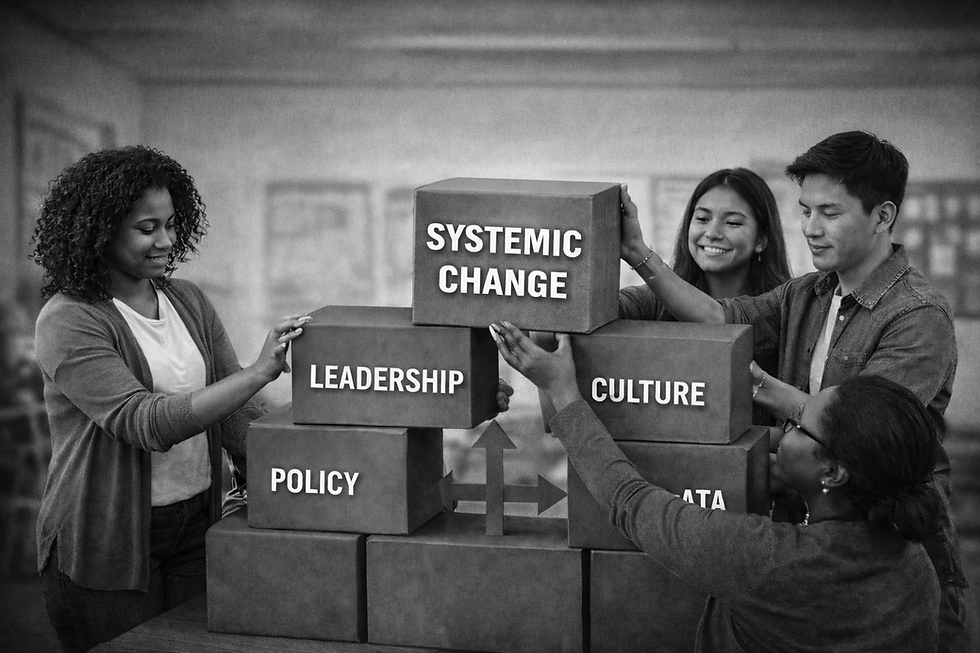
One approach we use in our work with districts is the Responsive Discipline Framework developed by Collaborative Learning Solutions. The framework helps schools move beyond reliance on reactive discipline approaches by aligning policies, staff practices, and student supports into a coherent system. It focuses on clear expectations, restorative responses, and tiered interventions so that behavioral issues are addressed early and consistently. When implemented well, the result is not just fewer disruptions, but stronger relationships, clearer expectations, and a healthier school climate for both students and staff. In one district example, the use of this framework has resulted in a “repeated behavior” rate of less than 9% across all 19 schools. This means 91% of the students do not come back to the office for the same behavioral concern following their participation in a very brief intervention program.
Supporting Teachers Means Supporting Systems
Most teachers entered the profession because they love working with young people. They want to teach, build relationships, and help students succeed.
But when behavioral challenges consume large portions of the school day, teachers lose the opportunity to focus on the work that drew them into education in the first place.
The schools that are seeing progress tend to share a few things in common:
Clear expectations for student behavior across all environments
Consistent responses to behavioral incidents
Restorative approaches that help repair harm and rebuild relationships
Early intervention for students who show patterns of behavioral need
Ongoing professional learning for educators
When these elements are aligned, discipline becomes less about punishment and more about building the social and behavioral skills students need to succeed, and just as importantly, teachers feel supported rather than isolated.
The Stakes Are Bigger Than Discipline
If nearly half of teachers are considering leaving the profession, the stakes are much larger than a policy conversation.
This is about the long-term health of our schools.
Strong discipline systems don’t just reduce disruptions. They strengthen school culture, improve student outcomes, and create environments where teachers feel confident they can do their best work.
If we want teachers to stay, we must move beyond debates about individual incidents and start focusing on building systems that work.
The good news is that many schools are already doing this work. With the right structures in place, it is possible to create environments where both students and educators thrive, and right now, that work has never been more important.
Our experienced consultants can support your schools and districts through professional development training workshops, coaching sessions, and ongoing systems support. Contact Us to request a free consultation.
References
EdSource (2026). Survey reveals almost 50% of California teachers may quit teaching soon.
Ingersoll, R., Merrill, L., & Stuckey, D. (2014). Seven Trends: The Transformation of the Teaching Force. Consortium for Policy Research in Education.
Gregory, A., Clawson, K., Davis, A., & Gerewitz, J. (2016). The Promise of Restorative Practices to Transform Teacher–Student Relationships and Achieve Equity in School Discipline. Journal of Educational and Psychological Consultation.